
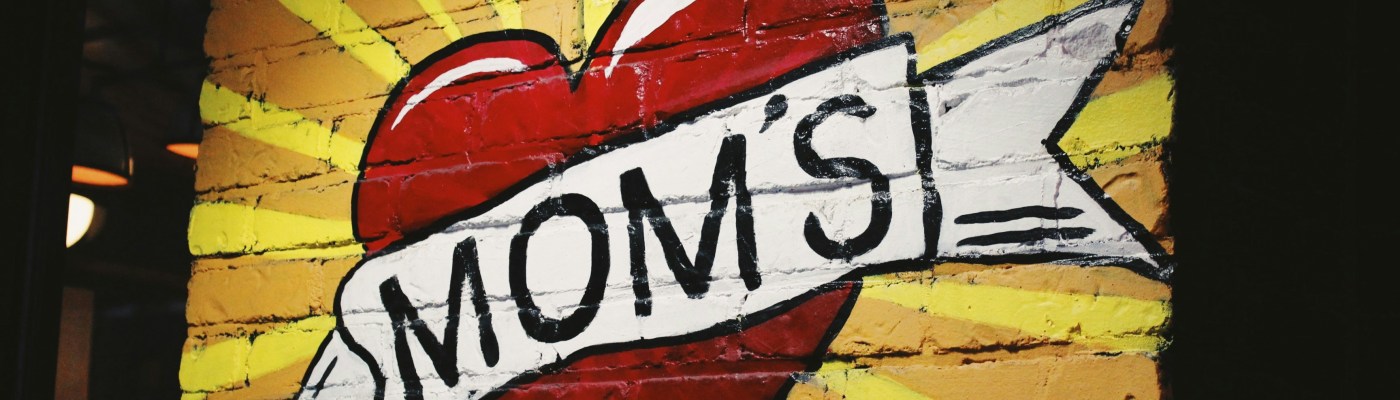
Spoiler alert: I still have a complicated relationship with Mother’s Day. I love being a mother to the two tiny people I am lucky enough to get to raise. I love the fellowship I experience through my connections to other mothers and mothers of all kinds.
I really don’t enjoy the face-value, ostentatious nothingness of Mother’s Day. I don’t enjoy this society in which mothers go hungry. I hate that pregnant teenagers are considered delinquent and are denied their right to an education. I hate that mothers carry the weight and responsibility of breastfeeding, and that chronically low breastfeeding rates are interpreted as a lack of will and interest from mothers, rather than a fundamental failure of empathy and imagination in our society. I hate it all of it.
No amount of pink-washing and flowery nonsense will make me – or any other mother – forget.
When I was pregnant with my son, a peculiar thing happened: people started calling me mother. Or variations on the term. I was known to strangers as mama, mom, mummy etc. It’s incredibly disturbing. After my son was born, I realised that the only people I wanted to unironically, non-jokingly refer to me as mother are the people to whom I am a mother. Because when other people call me ‘mother’, it seems to hold some sort of other connotations. It is almost always used by professionals who are charged with helping me or my children. It is almost always used in the context of a lecture or advice. It often feels infantilising and delegitimising. In my experience, it is never undergirded by love. And so, I thought – I think – to hell with that. The only people who get to use this title – this profound responsibility – are the people to whom it means love.
Society wants quiet devotion, and for me to be content with a month of platitudes. They don’t want to hear about the yawning gaps in our social welfare and security systems. They especially don’t want to talk about actually compensating the unpaid labour of pregnancy. They don’t want to hear about the links between motherhood and long-term adverse health outcomes for women. They don’t want to hear about what it means to be poor and hungry, and raising children.
So, for now, no thank you. Unless they are from my own children and the other mothers in my orbit, no to the flowers, no to the corporate platitudes, no to the appropriation of something real – realer than anything I have ever experienced – to feed our culture’s obsession with performance and significance. No to the continued refusal to face and really address mothers as mothers.
One of my favorite sketch shows, the Canadian BARONESS VON SKETCH SHOW, illustrates the problem with the surface brilliantly in a skit about land acknowledgements. This is what it looks like when the corporates are yelling about Mother’s Day. Or when you repost a Mother’s Day tribute, even as you slam mothers who rely on social grants. You’re just saying words. You’re not making anything right, for anyone. And mothers everywhere will remember.
 Rumbi Writes