
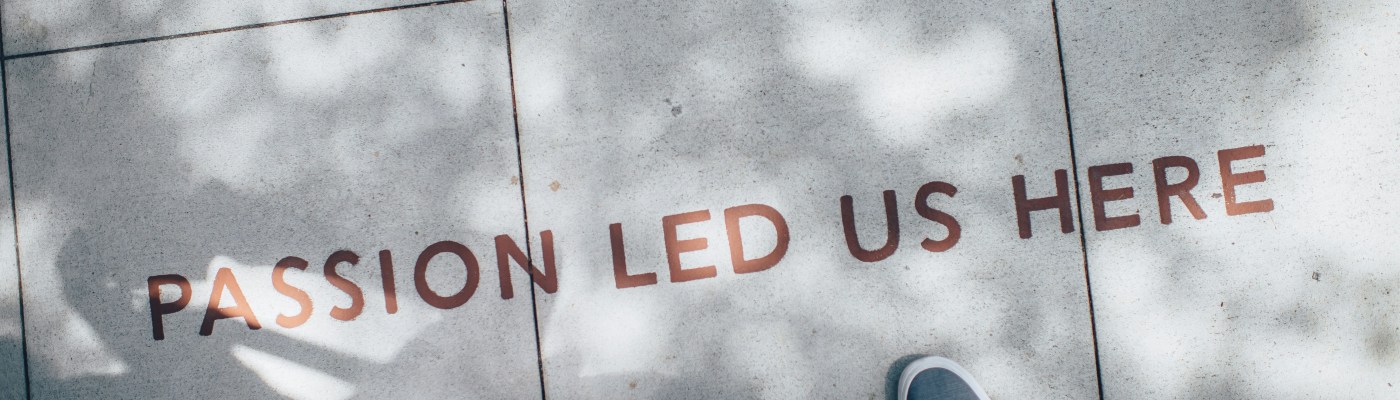
When I was younger, in years lived and hours spent working in the development sector, I burned out. I’d had my fill of the never-ending carousel of modeling and scaling and monitoring and evaluating that never seemed to change much. Or much that I could see in the field, anyway. I quit my job and retreated to a mix of academia and administration, two areas in which I have always excelled but that have never quite lit up my brain the way development does.
It’s been 12 years since that dramatic exit. I am back. Of course, I came back. I’ve been back for almost 10 years, in fact. My so-called sabbatical and reentry taught me a few things that I have tried to hold on to for the sake of my sanity and the sector.
Joy is the justice we give ourselves
Joy is the thriving,
Joy is the Justice (We Give Ourselves), J. Drew Lanham
of a people who won’t die
in the midst of all this
dying.
The moral arc of this universe may indeed bend towards justice, but what an uneven and gnarly path it cuts. A just and equitable future is on the way, but it is rarely visible in the moment. One must listen for it creeping towards becoming real. The best way to do that is to allow for wins and celebrations in work that can often feel starved of these. I used to be deeply skeptical about grand proclamations of change. A moment such as this, for example, in which South Africa feels poised on the precipice of real shifts in our early childhood provisions, was easy to write off as naivety and flash. At least some of it is also the marking of milestones along a long and arduous slog towards change. Personally, it has meant seeking out people and spaces in which such work – the work of finding joy – is respected and taken seriously.
There is no answer, but we are the answer
One of the absolute pleasures of working in the development sector is the people. Every meeting starts with a ‘check-in’ and is ‘closed out’. If you’re settling in for a long process – day-long workshops, multiday strategic breakaways – you can be assured that your context and all within it that enables you to make time for these processes will be there too. I grow suspicious when I am in development work contexts that compel me to pretend away my lived experiences. It signals a perceived distance from the society we seek to improve. It suggests that the origins of its problems have nothing to do with us, directly or indirectly. That’s a very dangerous place from which to do any social change work. Look out for the meetings in which you feel you can be present as a person, and in which you’re not working harder to obscure yourself than you are to actually do your job.
Magical Thinking is not the same as hope
Can we change our world? Probably. But that doesn’t mean we should go about imagining we’ve already done it. I know this seems in contradiction to my first point about joy and small wins. There is a marked difference, however, between acknowledging movement in the right direction and declaring that movement the destination or goal. If you’ve found something that works—a model, a tool, a framework—try not to see it as a magic salve for everything. That’s not to discredit what you’ve found; it’s to do it justice as what it is—a means to achieving a complicated end. And it’s just one of many. If you close yourself off to other approaches and solutions, you risk missing out on discovering other means to achieve that end.
Mistakes are welcome
Working without guarantees is thus becoming aware of the vulnerabilities and blind spots of one’s power and representational systems. It is accepting failure, or put positively, seeing failure as success. The implication for development is that we need to learn to be open, not just, in the short-term, to the limits of our knowledge systems, but also to the long-term logic of our profession: enabling […] while working ourselves out of our jobs.
Ilan Kapoor, Hyper-self-reflexive development? Spivak on representing the Third World ‘Other’
I’ve made many mistakes. In my work but also in how I see my work. When I left 12 years ago, I was out of patience, kindness and grace. Reader, I am not proud of this, but I flounced. Three years later, I returned, tail between legs to the same organisation I had so dramatically exited. To his credit and to my eternal gratitude, the CEO was gracious and welcoming. I hung around for another six years till I left for my current post. This time, I felt and left clear-eyed and energized, and grateful. The stakes in development work can feel overwhelming. Lives are, literally, in the balance. The drive to solve can sometimes take up so much space that there is no room to recognise and correct our own errors. And we give no quarter to those who recognise them for us.
Nothing is permanent – and that is permanent
This lesson comes to me courtesy of development work and motherhood. For all the ways in which I love development, it is a frustrating business. Injustice can feel grindingly permanent. There are so many varied (and often) competing interests and voices, and it is sometimes difficult to summon the energy and optimism for this work. I felt that way 13 years ago. I have felt that way more than a few times since my return to these spaces. It will all pass. All of it will, even the very best parts. It might not change quickly, or in the course of your lifetime. This work we commit to is about change. I believe all of us who are in it are betting on this. Moments, models, and game-changing ideas must also merge into this river of change, and we have to be secure in the knowledge that change is a fundamental part of the work. Change is hard, as is the work.
Photo by Ian Schneider on Unsplash
 Rumbi Writes