
Obstetric violence is endemic.
So much so that in 2011, Spanish birth activists founded the Roses Revolution. Women across the country left red roses at the doorsteps of birthing institutions at which they experienced disrespect, abuse and neglect during pregnancy and/or birth (broadly understood as obstetric violence, or OV). Each rose contains a birth story, and at the heart of each story is the trauma endured by a pregnant or birthing person.
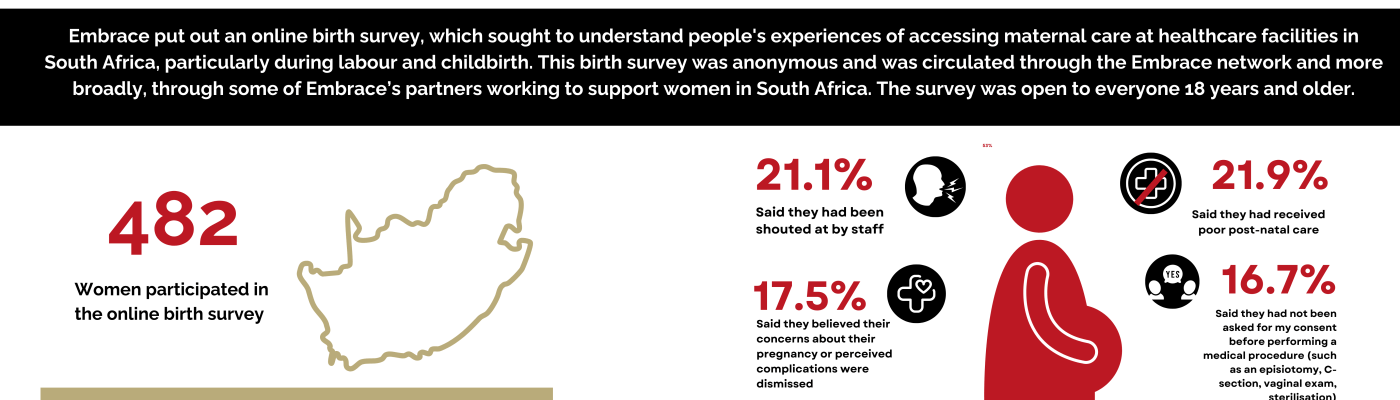
In lieu of roses, Embrace, the organisation at which I work ran an online survey asking women giving birth in South Africa to share their experiences of such trauma. 482 women responded, and the results are astounding:
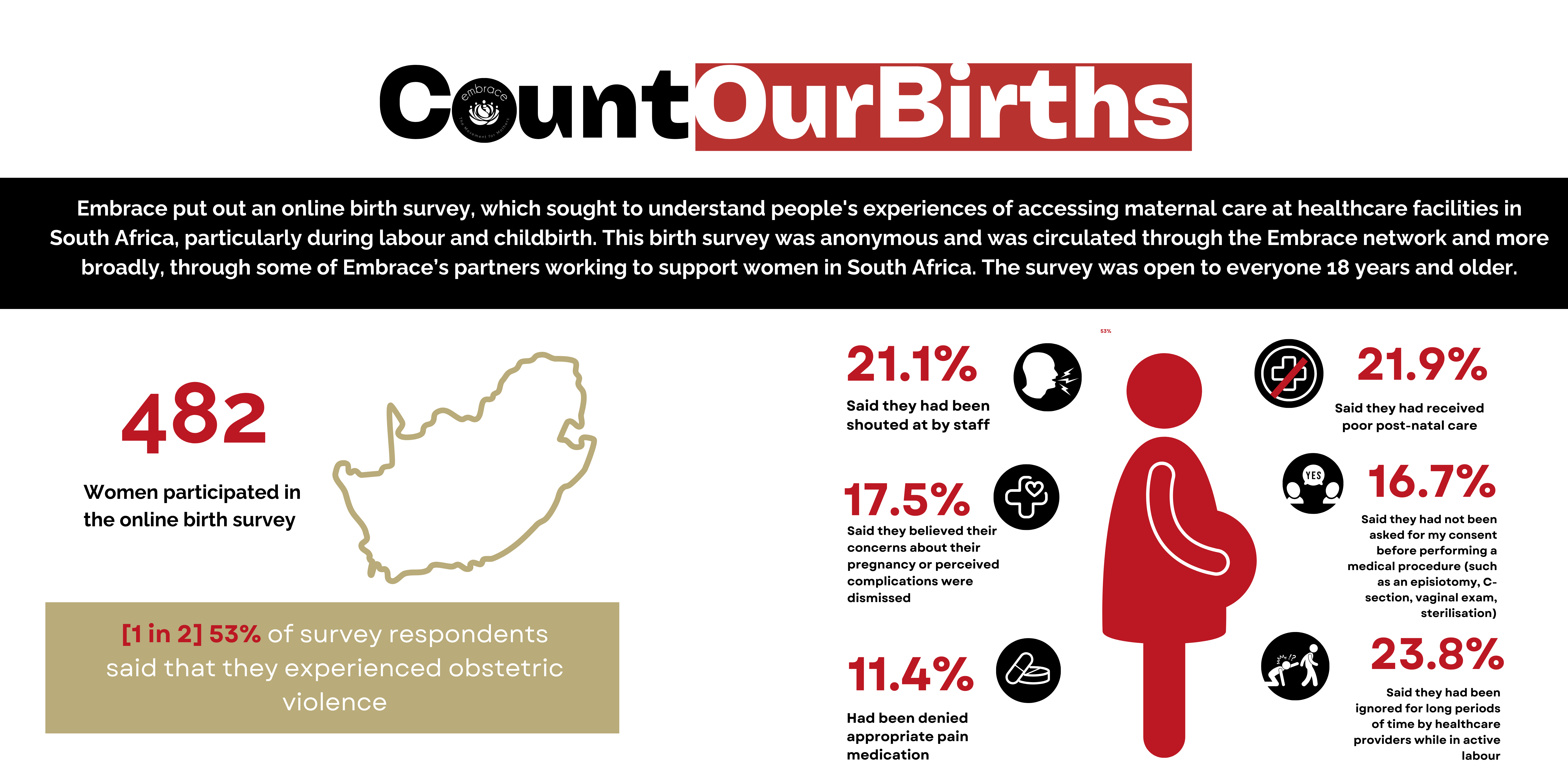
Courtesy of Embrace (https://www.embrace.org.za/birth/)
Half of the respondents reported experiencing a wide range of abuse. They report being ignored while in active labour, yelled at, slapped, denied appropriate pain medication and so on.
The survey confirms what we’ve known from our interactions with mothers. Many mothers’ experiences are coloured by the trauma they endure at that very vulnerable period when they are becoming mothers. A mother doesn’t just appear along with the baby. She is forged by her experiences and by the support (or lack thereof) she is able to access as she navigates the sometimes overwhelming responsibilities that come with parenthood.
In Embrace’s work, we’ve found that those mothers who experienced OV never forget it. It emerges as they discuss subsequent birth experiences. It comes up when they become grandmothers and see their daughters through pregnancy and birth. It is front-of-mind, whether it happened 15 years or 15 months ago. OV’s devastating effects weave their way into the tapestry of motherhood.
Even so, hope blooms eternal. The stories – the roses, the data – are a symbol of the resilience of mothers. They refuse to be silenced by those who count live and healthy babies as the sole indicators of healthy births. They are unbowed in the face of obfuscation by health institutions who are eager to heap blame on individual clinicians. They tell their stories, they leave their roses. They want it known that this happening everywhere, right now. It’s not just about individual institutions or clinicians – this is about a global culture that does not recognise mothers as central to this experience in their lives.
The deep hope and joy our children inspire, the intense and lifelong bonds of friendship we build with fellow mothers – those are amongst things that keep mothers going. Motherhood is an important force for good in this world. If this force is to be nurtured and amplified, we must protect the richness and range of mothering and motherhood experience and identity. We cannot let it be systematically eroded by the scars and silence of OV. By standing up and speaking out, mothers continue to push back against the normalising of OV, and the acceptance of trauma as a necessary part of becoming a mother.
Sarah Menkedick writes that “[m]othering, radically defined, is the glad gifting of one’s talents, ideas, intellect, and creativity to the universe without recompense.” We refuse to allow obstetric violence to diminish that gift, the gladness with which it is given and the better world it will birth.
 Rumbi Writes